Neurosurgery for children and adults
Lumbar and cervical disc disease - from symptoms to an individual care plan.
Assessment brings together your symptoms, neurological findings, imaging, day-to-day function, circumstances, goals and preferences. Surgery is not assumed to be necessary.
This illustrative adult patient journey is an AI-assisted dramatisation and does not depict a real patient. It does not promise any particular treatment or outcome. The actual care pathway, team and place of treatment may differ.
Surgery is only one possible option and is considered only when medically justified.
A whole-person approach
The person and their symptoms come before the scan report.
During assessment, I consider symptoms, neurological findings and imaging alongside day-to-day function, circumstances, goals and preferences. We discuss possible benefits, limitations and alternatives. Surgery is not assumed to be the right option.
Knowledge hub
Find information about a condition or symptom.
Information about lumbar and cervical disc disease appears first, followed by other neurosurgical conditions. The information is based on reviewed sources, but it cannot diagnose a condition or determine whether surgery is appropriate.
Lumbar disc disease and nerve-root compression
How clinicians distinguish radicular pain from other causes of leg pain and consider symptoms, neurological findings and imaging together before choosing treatment.
Cervical disc disease, radiculopathy and myelopathy
How nerve-root symptoms differ from spinal-cord dysfunction, and why myelopathy may require prompt attention even when there is no severe pain.
Hydrocephalus
How cerebrospinal-fluid circulation can become disturbed, which symptoms may occur and what assessment may involve.
Brain tumours and tumours of the spinal canal
Why a lesion's type, location, symptoms and rate of change matter when planning further investigation and care.
Glioma
How MRI, neurological assessment, tissue analysis and molecular test results help inform the next steps in care.
Vascular neurosurgery
Why aneurysms, arteriovenous malformations, fistulas and other vascular conditions require an individual assessment of risk and treatment options.
Chiari malformation type I
What an MRI finding may mean, why some changes cause no symptoms and when further assessment may be needed.
Head injury
How a head injury is assessed, which warning signs require urgent help and where patients and carers can find reliable information.
Patient journey
From careful assessment to ongoing care
This is an illustrative framework for possible care, not a promise of how care will proceed.
- 01
Conversation and symptoms
Discussing the symptoms, how they have changed, previous results and their effect on day-to-day life.
- 02
Examination and review of results
A neurological examination and a shared review of imaging and other available investigations.
- 03
Discussing the options
Considering observation, non-operative treatment, rehabilitation and surgery, including potential benefits, limitations and the patient's preferences.
- 04
Procedure - only when indicated
If surgery is medically justified, its purpose, preparation, risks and alternatives require a separate discussion.
- 05
Team-based care and rehabilitation
Different professionals may contribute according to need, and rehabilitation may form part of the plan.
- 06
Returning home
If surgery takes place, discharge includes practical guidance, a follow-up plan and advice about when to seek urgent help.
- 07
Follow-up and the next step
Reviewing symptoms, function and results, then agreeing the next step together.
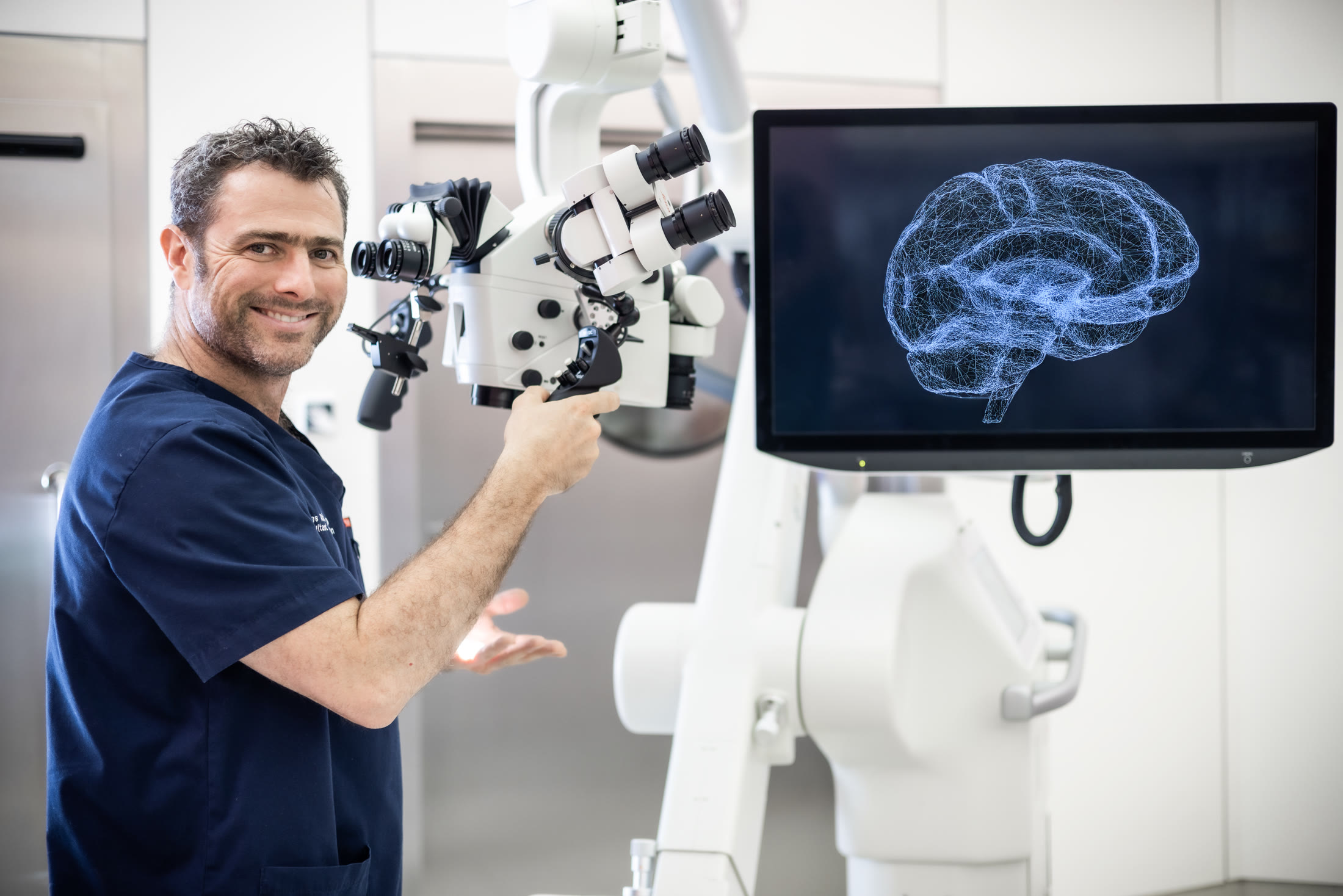
Professional information
Lucas Rákász
Neurosurgeon. Separate sections of this website set out areas of practice, qualifications, training and professional work, with sources that allow the information to be checked.
- Poland
- NIL • PWZ 2164627
- United Kingdom
- GMC 7044938